


_edited.jpg)
Using devised theatre to explore current societal issues
The history of devised theatre
Gloucester Welcomes Refugees Charity once again commissioned Gloucester College to create a murder mystery show for Christmas, after a successful production 2 years ago that raised a significant amount for the charity. We are going to work as a devised theatre company, performing a show where the students handle all job roles, including acting, directing, costume, makeup, advertising, lighting and more. The aim is to raise money for the charity, create a great show and gain experience in various roles the theatre has to offer. We will rely on the audience to donate 10 pounds for the charity for the show in a form of pre-purchased tickets.The target audience is anyone over the age of 10, who enjoys interactive theatre and wish to solve the case.
I joined the course not knowing what to expect. I was nervous to be meeting my new classmates who have been working together for years and I haven't had a plan or vision about how I will fit into this environment. I was also worried about having less experience than them and whether or not I will be able to pick up speed and be worthy to perform with them. I knew I had to overcome my fears and focus on the work as we hadn't had much time until Christmas. I understood that we are going to make a play from scratch but I haven't met the concept of "devised theatre" previously, so to start the work, first I had to understand what it means.
The idea of devised theatre comes from the 16th century Italy , started by a new traveling theatre, Commedia dell’arte, translates to “Comedy of Art” or “Comedy of the professional” , means word-of-mouth or improvised performance. They showcased players, acrobats and street entertainers and became very popular with it. The concept was to focus on the performances of the actors and not the subject matter of the plays.
The team works together to create a new piece of work without a pre-existing script. The creative team and performers use experiments, stimuli and improvisation to start the work. Nowadays, the final product is usually scripted or partly-scripted. If the team is newly formed, where the performers don't know each other, it is suggested to start with ice-breakers, creative and introductory games.
We used games to help us get to know each other, build a bond between us and to work on our devising techniques. In the videos below , we can watch the games the two groups invented by using four random objects only, selected by the other group. The rule was that the game invented had to be enjoyable, playable and winnable.
Murder Mystery
Creating games by using 4 random objects
Jamie Parry and Matt Kuter, two actors, visited us to help us with devising and tell us their experience and advice on making a murder mystery show. We learnt about the "7 levels of tension", invented by Jacques Lecoq, a French stage actor, who advised that a character's mood and state can be displayed through the ways they move and this can be split into 7 levels, from catatonic to tragic.
1.Exhausted or catatonic: a stress and tension free state. Moving or speaking is a real effort.
2. Laid back : a relaxed state, lacking any enthusiasm. The body and mind are tired, ready to rest, ready to give in and give up.
3. Neutral: our true-self in the now, in the moment. Not worrying about the past or thinking about the future just existing in the moment but being present and aware.
4. Alert or Curious: looking at things, looking behind us. Maybe we heard a noise, or did we not? Sitting down but then suddenly standing up because you are being suspicious and can't decide whether or not you are in danger.
5. Suspense or the Reactive: realising that we could be in danger. Start to become alert, pay attention to smells, sounds and changes. You are alert and ready for something to happen, there is tension in the body, the mind is open and focused.
6. Passionate: we know we are in danger. We saw an unknown figure standing in the room and it is difficult to control ourselves. The tension has exploded out of the body, anger and fear is present.
7. Tragic: the figure in the room starts running towards us with a weapon. We run around screaming, shouting, petrified, heart beating fast. Or paralysed from fear, the body can’t move. The body is solid tension, jaws locked, tear running down the face, we are speechless.
Usually, characters' emotions change throughout the play and this technique helps the actors to transition between different emotions on stage, by teaching them what each of them mean and just simply finding their neutral state.
This made me realise that not only speech but movement is crucial when performing, it is part of becoming a character. What more, it is even important when not speaking on stage, acting while not acting can only be achieved if we understand what state our character is in and how they would react to what's happening around them. If I am being honest, I had no idea how I could ever achieve this, so at this point this technique did not seem helpful to me but felt like it pointed out things I didn't know how to do.
7 levels of tension
And Then There Were None- 1945 Murder on the Orient Express- 2001 Death on the Nile- 2022
When I first heard that we are performing a murder mystery show, I had a basic understanding of murder mystery, I probably saw a couple of movies around the topic. I knew that there was someone who was murdered by the suspects presented and we could find out who commited the crime with clues given but I had no idea how this could be achieved in a smart and enjoyable way. Luckily, we played a round of games to familiarise ourselves with the topic but I got lost in all the details and characters so I did not feel positive about this at all. Later on, I did some research.
"A murder mystery game is a type of party game in which players investigate and solve fictitious murders. In many variations, a player secretly plays as a murderer while the others attempt to determine the murderer's identity. These games typically involve a group of 6 to 20 people." Wikipedia.
Agatha Christie (1890-1976) was a British author who wrote detective and many murder mystery novels, including some of her best-known works: And Then There Were None, The Secret Adversary, Murder on the Orient Express and much more. These became popular because of her interesting approach that anyone could be a murderer so she used everyday and righteous characters instead of obvious, foolish or trouble-maker ones. They were all set in isolated locations, like remote islands or broken down trains, reducing the number of possible killers. Her themes always served a good cause by showing emotions such as loss, guilt or betrayal. They also educate on conditions in the twentieth century, for example when women were allowed to work or the effects of the war. Famous detectives are Miss Marple and Hercule Poirot who use wisdom, common sense and intuition to solve crimes. Her writing style is minimalist and leaves plenty of space for the reader to fill in the gaps with their imagination. Of course, some of her work has also been adapted to films and they continue to be a great success.

Next, we started working on our show by matching characters from the play book with the students' personalities and capabilities to make them come alive. I was chosen to play "The Dragon". This character is originally a male but because this is my first live performance as an actor, I have chosen to play a female character to make it easier for me to succeed. Dolores Dragon is the niece of The Countess (the party host), who comes from a wealthy family and is considered to be the most desired woman in the whole of London. Men seem to like her because she is attractive and owns multiple properties and a great fortune, left to her by her mother. Her other character trait is to be overly protective of her younger sister, The Dove, who is a naive and young girl. Due to her owning a great amount of money herself, older men prey on her and she already had her heart broken by The Dragon's old classmate, Red Cloak. She introduced him to her sister, so she is probably blaming herself for what happened and this could be one of the reasons why she refuse to let her sister out of her sight.
This character requires a great amount of confidence, genuine charm and power. But how can someone be likeable and powerful at the same time? Is "wanted" synonym of "likeable"? This is for me to figure out in the next few weeks. The question isn't about if I am similar to this character but whether I have it in me to portray her authentically.

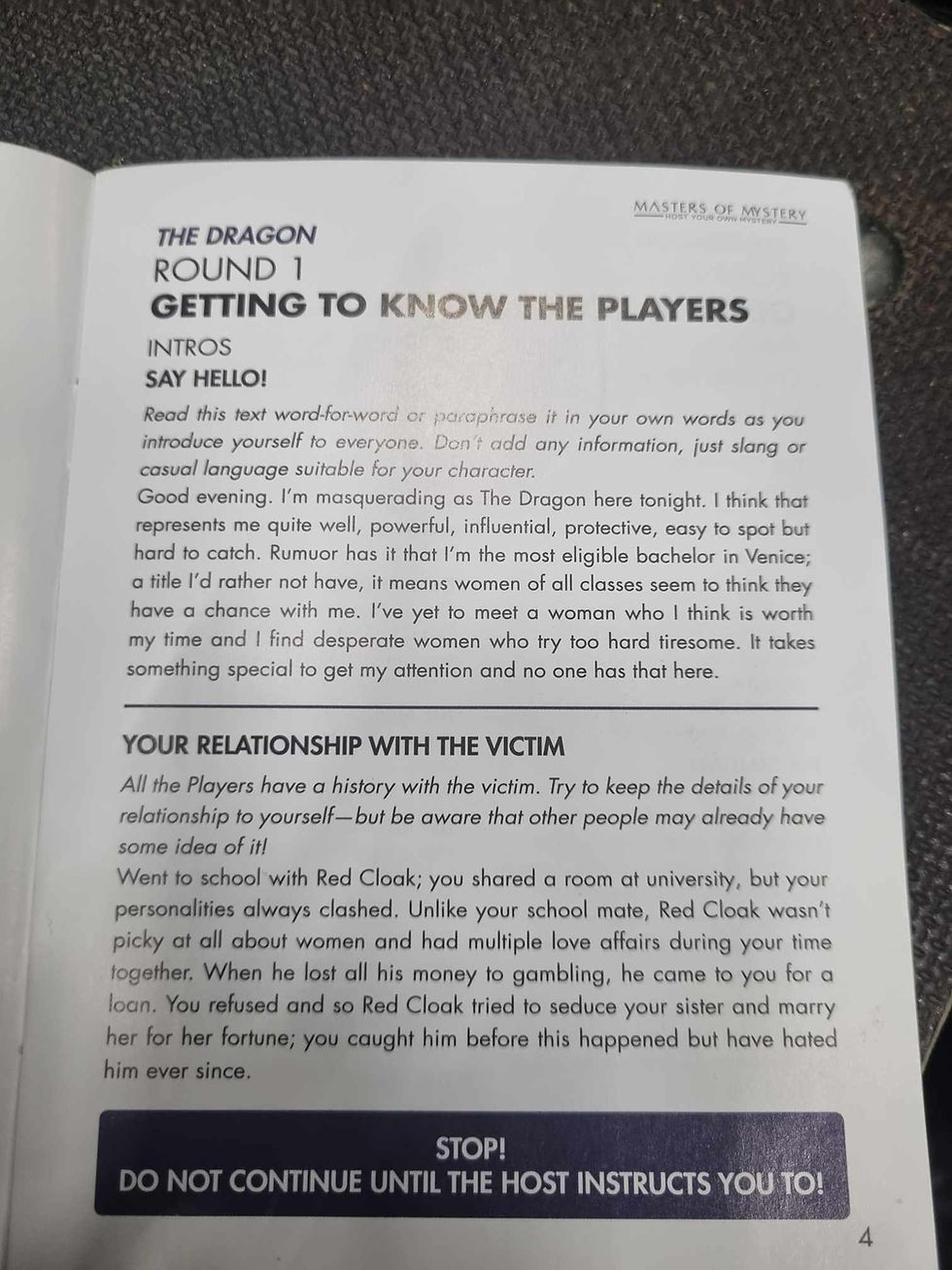
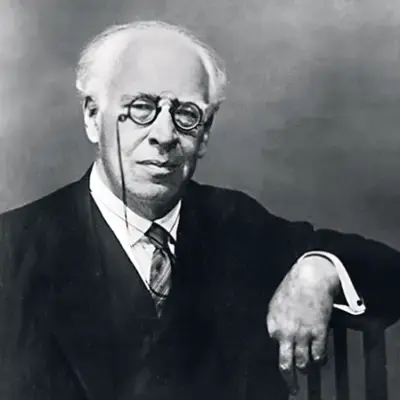
A week later, after getting our character sheets, we tried a Stanislavski technique, "hot-seating". Stanislavski, the ‘Father of Modern Theatre’ was a Russian theatre practitioner. He created the Moscow Art Theatre, a theatre company which was dedicated to creating theatre that was naturalistic. His mission was that his actors performed naturally, making the audience resonate with the play and believe that they are watching real life events.
All students in the class were questioned by the group about their characters' background, behaviour, feelings and motives to kill Red Cloak. Most of us found it frightening as we felt we didn't know enough of our characters to be able to answer questions about them but it made us think about our characters in depth and helped us realise that we have a lot of work to do as the audience might asks us very similar questions on the day of performing. This technique also helped us gain experience in improvising and quickly making up stories without freezing on stage.
To help get a feel of our characters, we played many random situation games, for example waiting at the bus stop, travelling to Disneyland, where we had to think, move and speak as our characters. Taking them out of their environment and placing them into foreign timelines and places helped us adopt them better and made us believe that we could be our character in any situation. We started to build acceptance and a bond with our future-selves.
We found it important to have a production meeting early on. Production meetings are a gathering of the actors and crew to discuss the next steps. As this was our first one, we clarified job roles and set deadlines. This is important because it shows who is responsible for what area and the time of certain tasks that are expected to be completed. Next to playing "The Dragon", I will also be taking on the role of Wardrobe Manager and Stylist with the help of Faith B. It means we are responsible for everyone to be appropriately dressed to their characters, considering e.g. age, sex and status.
Please, see notes from the meeting.
Meeting Minutes
First Production Meeting 27.09.24
chairing the meeting: SF
present: CR, RT, HF, SG, JJ, WE, BK, PP, KH, TD, FD, FB, SF
apologies: N/A
Agenda:
-
Underline roles.
-
Directors to clarify their vision.
-
CR Liaising with the Charity Organisation, she will then confirm the dates with them and has also created a timeline.
-
SG to create marking side of the performance, JJ has already created a poster for the performance.
-
All elements of backstage covered.
-
HF has envisioned the performance to be set in early 1920's, first world war.
-
FB & FD has sourced some costumes already.
-
Performance to be more serious with a comedic undertone, SF has said to use caution with how the performance tone is set and said to comedic to do with a serious undertone. make sure to entertain the guests but make it believable.
-
Make sure to keep chairs 60 people maximum for seating.
-
The performance is going to be vaguely scripted. (could experiment with AI)
-
Budget wise to keep to a minimum, maximum 100 pounds.
-
Costumes to keep to a colour theme, masks to be sourced by FB. makeup could create masks if needed as it could keep costs down.
-
Lighting Design needs to have a side meeting with Set Design.
-
Timeline has been set for the group.
Roles for Backstage:
Producer: CR
Overall Management: JJ
Lighting Operator: WF
Directing: HF, RT
Set Design: SG
Hair and Makeup design: BK
Hair & Makeup Application: Emily
Costume Construction FD, FB
We paired up for this devising technique and created chair duets. In the video, we can see Phoebe Pope and me performing our duet for the song of Tate Mcrae - Friends don't look at friends that way.
Chair duets, developed by Frantic Assembly, a British theatre company, are devising techniques that help to form and establish the relationship between two or more of the characters on stage. It usually involves two performers and a series of touches, embraces, flirtations, and rejections, all while being sat on a couple of chairs. They often repeat movements in a loop cycle.
I found it surprising how creativity is a transformable skill. My connection with my body is poor, I can't dance, I do not enjoy watching others dance either. So, when Phoebe, who studied various types of dance at university, chose me to perform with her, I went into it with a negative mindset. However, out of respect for her, I knew I would try my best. Our stimulus was a song that we both know and love and it helped with setting the mood. Although, I didn't know any real dance moves, I realised that I understood the message of the song and was able to suggest suitable moves. By Phoebe listening to me and using some of my ideas, it made me feel closer to her and to our project itself. This proves that it is essential to try different devising techniques and broaden our horizon, as we never know what works for us, unless we try it. This technique helped me realise that my character possibly had private dance and ethics lessons as a child, so she must look nimble as she elegantly "levitates across the floor".
Chair duets
Another devising technique that we used was where Phoebe created improvised stories and the characters had to be played by us. This significantly helped with our improvisation skills. For the story-teller, Phoebe, it was a great exercise to create stories from scratch, using her imagination and for us acting, it was an opportunity to understand requirements and quickly come up with ideas. We approached the work by using humour, which is very important for creating a strong bond and a cheerful atmosphere between the actors and the crew. Although, the show will be a murder mystery play, we will be focusing a lot on using humour and overreaction to bring on the Christmas spirit, make the audience smile and to make it a great family entertainment, where children and parents can join in to solve the case.
Improvised stories
In the following videos we can see the first attempts of creating the start of the story with The Countess and Red Clock arriving, the characters introducing themselves and the first round of accusations.
At this stage, there was a lot of discussion, improvisation and filtering happening.
We carried on working on our improvising skills, some of us experimenting with different accents or tension levels, which led to funny moments and to words and lines that will never be used but more often they did end up being used and became eye-opening. When actors start playing with their characters, thinking "What if my character said that?" or "How would the detective react when insulted?", new and unexpected ideas come out and we often built on these thoughts or half-sentences. The beauty of it is that everyone's approach and understanding of a character is different. For example, a couple years ago, there was a murder mystery show created by the Performing Arts students in the very same theatre, led by the very same teacher, Sonia Friend, however it was unalike because their understanding and approach was different from ours. There are other factors as well such as we have a bigger group. I believe that they only had 7 people working on the show, while we have 13 with both HNC and HND classes working on the same project. Their group was males only, while we have the same number of both gender presenting. This gives us a wide range of interests and skills and we are able to cover all job roles from lighting to makeup , everyone doing what they enjoy, maximising productivity.
First time trying out the existing parts
Scene 2 and 3 discussions
We carried on working on the next two scenes, where we reduced the numbers of potential murderers, based on the evidences provided. We did this to avoid repetition, give the play a better flow and leave time for more interesting extensions. We agreed on the need of making the case challenging but not impossible to solve for the audience. We discussed how each character is connected to one another, why they are at the party, who they have conflicts with and why. Being able to sit down with the director of our play meant that we were able to get answers to questions we were unsure of. This meeting challenged our ability to see the bigger picture and we learnt not only ours but other characters' feelings, struggles and motives. This worked really well for our group as we not only understood how we are expected to treat other characters in the play but also opened our eyes to the struggles the actors might face when trying to create their characters.
First trial of blocking
We agreed that because we have almost a dozen characters to understand and think of, we needed a script written. This helped us not to get lost in the details and to firm up what we discussed so far. This was also crucial to do because the whole team only met once a week and without recording our ideas, they can easily be forgotten. On this day, we had a small team to work on our Murder Mystery project, which gave us the opportunity to work closely with our director. Working in a smaller team and being in a different building, sitting around a table, with no distraction around us created the atmosphere of an office work environment and resulted in a very progressive day. We have managed to block the first scene, firmed the first round of accusations and decided how to use the masks the most effectively. We are going to have the masks on wooden sticks, so it does not ruin the actors hair when taking them off and we are going to stop using them when the detective asks us . This way we fulfill the idea of a masquerade ball but we do not have to carry them around with us during the whole show. We also realised that the play is moving in a faster speed than expected so we had time to add a second murder. This will be an unexpected twist and a distraction, aiming to keep the audience's attention and it will also help to move the story along by reducing the number of suspects. Finally, it will break up the repetitive structure of accusations.
Click here to view the first outline of the script.

Character development
The directors asked us to research the 1920s and the way people spoke and behaved in that era, so I thought this was a good opportunity to talk about how I am approaching my character.
THE DRAGON
THE FACTS
Niece of the Countess
Has properties in Venice and Italy
Her mother left her money after she died
She is very attractive
Men seek her company
Proud, confident and powerful
Protective over her sister, acts as a strict mother
Does not like poor people
HOW SHOULD SHE ACT?
She is led by her delicate hand movements
Wear gloves because she would not touch anything bare hand
Keeps a straight posture (thread attached to to the top of her head and being pulled up) and walks nimbly
She keeps a straight face and frowns when men try to talk to her
She steps in whenever someone approaches her sister
Stock characters by Commedia dell'arte
I previously mentioned that Commedia dell’arte is an improvised comedic theatre that comes from the 1500’s Italy. It is also famous for its stock characters. These stock characters always stay, look and act the same in every story. The characters are exaggerated but based on real characters, like the know-it-all doctor, Dottore or the greedy old man called Pantalone. Characters from the same categories all have the same attitude, the same look, the same drive, the same physical action in all stories.
Categories:
The Servants eg: Columbina (hungry and mischievous)
The Masters eg: Pantalone (foolish or greedy)
The Lovers eg: Isabella (always in love)
The Braggers: Il Capitano (call himself captains and brag about fake achievements)
Most of the characters wear masks or have their personas as masks like their walk, a pose, or a gesture.
The themes are limited and the play is usually about love, money, food, simple scenarios. The use of mime , acrobatics, and music is also a key element of these stories.
A couple of main characters to mention:
Pantalone

The name Pantaloon translates to 'old fool' or 'dotard'. His character is based on the love of money and his pride in himself. He is usually a single man but flirts with the ladies and is always rejected due to his unbearable attitude.The traditional Pantalone stance is that of a hunch-backed old man. He is skinny and short and his stance makes him appear even shorter. He walks with his hips pushing forward, knees bent and turned out and his back hunched. His body is stiff, cant move quickly, if he has to, he will end up with an asthma attack. Oppositely, his head, hand and feet can move quickly.


Il Dottore
Dottor, the Doctor is usually rich and extremely pompous, egoistic and greedy. He is the comic foil of Pantalone, they are either friends or competitors but negative or positive, they usually have a strong bond. He is led by his huge stomach as he enjoys drinking and eating, his favourite treat is chocolate. Similarly to Pantalone, his love life is also chaotic. Even if he finds love, he cheats on his women. Dottore walks with his chest up and knees bent, making small, slow and bouncy steps. He uses his hands to make room for his fat belly and keep others away. His mask is partial, exposing his red cheeks, implying alcohol misuse.


Harlequin
Harlequin, or Arlecchino in Italian, is the best-known of the Zanni (comic servant) characters. Some believe, that the name Harlequin means mischievous devil or demon and it was based on character from the medieval French version of the Germanic Wild Hunt. He is a black-faced evil, chasing rotten souls to Hell. This is where his black mask comes from. This explanation is probably the closest to the use of Harlequin nowadays. He was originally a light-hearted, nimble and sharp-witted servant. He often spoils plans of his master, this is where his playful behaviour comes from. He also gives the base of the romantic hero. His appearance is circus performer-like, he is nimble and agile, and often performs acrobatic moves.
This character came to England in the 18th century by Lincoln's Fields Theatre's actor-manager John Rich, who transformed it into a mischievous magician. Harlequin used his magic "slapstick" to change locations and scenes by transferring them from the pantomime into the harlequinade world. To maximise the comedy affect he was often paired with a clown.

The Payne Brothers – Harry (left) as Clown and Fred as Harlequin, c. 1875
from Harlequin to Harley Quinn or Harley Queen?
Becoming
Harlequin has been transformed once again into comedy books and later on into films. It has been portrayed by various actresses. My personal favourite is Margot Robbie, Australian actress, playing this character in Suicide Squad. She represents all the characteristics the original Harlequin had. Dr. Harleen Frances Quinzel is intelligent, works as a psychiatrist and treats the maniac Joker hoping to turn him around. However due to her naive and warm-hearted nature, she gets tricked by him but it doesn't stop her from falling in love with him and becoming his sidekick. She becomes a playful and naughty criminal and desperate lover and together they represent "crazy love" and the meaning of "ride or die".
"He's out his head, I'm out my mind
We got that love, the crazy kind." Halsey
I have not found my stock character type yet but I understood that movement and being able to stay in character throughout the show is important for a believable performance. I also understand that Dolores Dragon comes from a wealthy family, where she has probably been sent to private dance, etiquette and horse-riding classes. Therefore I believe that her movements must represent this and she should walk with a straight posture and have light, effortless steps. Hand movements and gentle gestures will also be important when portraying her. She wears gloves to keep her hands clean and often looks at herself in the mirror and looks at the expensive ring on her hand that one of her admirers bought for her. Because she is extremely picky with the partners she chooses, she also represents woman power and independence. Due to their mother dying, she becomes the step-mother of her younger sister and she tries to protect her from older men, who prey on her for her fortune. She is straightforward and honest with her likes and dislikes.
A slice of history
TIME FOR A CHANGE
The 1920s in England went through significant political, economic, and social changes.
Women's rights
Women over 30 were allowed to vote from 1918, and over the age of 21 from 1928. In 1920, the very first women were allowed to study at university, thanks to the University of Oxford.
Technology
The BBC was funded in 1922 and there were other mechanical and electrical innovations.
For example, introducing cars, fridges, roller coasters and more.
Economy
The 1920s started with a rise but very soon fell back. There were high unemployment and strikes, the biggest one that happened in 1926 where 1.7 million people protested against pay and working conditions. The difference between social classes grew.
Social change
New styles of music and dance appeared, like jazz and the Charleston. However, not everyone was able to let the strict mentality go and many feared that preaching freedom would be a bad influence on young people.
Politics
The Labour Party won over the Liberal Party in general elections.
World affairs
Britain took over former German and Ottoman territories, but lost Ireland, who became independent in 1922.
How to act like The Upper Class from 1920
For someone, who was born in Hungary to a poor family, this will be extremely challenging to portray. I moved to England at the age of 17 so I have not learnt the correct tongue and lip movements to pronounce words authentically. In my opinion, my accent is a mixture of European and Hampshire accents. The other problem I face is that I haven't got British parents or grandparents, so I never heard of old words and phrases that others might have from their elders.
I looked at the Flapper Slang: Talk the 1920s talk article to educate myself and to consider words my character might use. "Handcuff" meant "engagement ring" and "Bank’s Closed" meant "No kissing!". These are phrases I can see my character use.
I also browsed Youtube, hoping to find some videos from the 1920s and I found a couple. For example this one, which shows people at the beach from around the world. It was surprising to see how most women had short hair and I wanted to know why. I found that next to the obvious reasons, which is short hair is easier to maintain and keep clean, it was also a fashion trend. Women were inspired by famous actresses, like Louise Brookes, Clara Bow, Colleen Moore and Marion Davies, and cut their hair to look similar to them. It also became the symbol of bravery and freedom, breaking away from the traditional "long hair look" and forced feminine roles.


This video shows the streets of London in 1926. We can see that it is very busy , filled with people walking buses and cars driving around, just like today.
I found it almost impossible to find real videos from the 1920s. Most of the films that were saved and uploaded online were silent movies. It was even more difficult to find women speaking in them as most of them were men monologue or preach about something or narrating videos, even if it was about women's beauty routines.
Here is a video of a 1928 New York accent. We can spot that the words were shortened, some of them very quickly said and almost sung. People spoke in cabaret style, or as I call it, radio presenter style.
The Amateur Gentleman by Douglas Fairbanks Jr. was one of the first British movies released in England. It is in black and white but a great ideas can be taken from the way the upper class spoke, acted and dressed in that era.
"The Amateur Gentleman is a novel by Jeffery Farnol, published in 1913. It was made into a silent film in 1920 and again in 1926 and a talking film in 1936 with Douglas Fairbanks, Jr. starring as the protagonist, Barnabas Barty." Wikipedia
To sum up the story, Barnabas gets an enormous amount of money, thanks to his talented boxing father and plans to use the fortune to become a gentleman. His father is against this and they end up in an argument and fight where Barnabas beats his father. He then moves to London where he meets friends and enemies.
The Ghost Camera is a British mystery film that became the most popular film in the 1930s. I particularly like it because the story is similar to our show. There is mystery, murder and detective work.
John discovers that a camera has appeared mysteriously in his car. One of the pictures on the camera shows a murder. He identifies one of the women in the pictures and together they travel the country to find her missing brother, who they believe owns the camera camera. They work against the police, who are also looking for him.
The other beauty of this film is that Ida Lupino as Mary Elton appears in the whole of the movie, so we can observe a woman from the 1930s and gain knowledge on a lady's speech, voice and acting from that time.
The script that's never truly finished
We did a read-through of the, what we thought to be, the finished script. There were some adjustments made and I received more time on stage to show the relationship between the Dragon and Dove. It is important to portray a strong bond between them, even if it is non-verbal, they should always lock eyes, as the characters are built on this strict sister and naive young girl bond. Of course, while we were reading the script, it changed again, and by the afternoon, it changed once again. Devising is a creative work and we are constantly being inspired by our own and other characters' lines, so the script keeps changing, even now. I also believe that the lines will only reach their best forms, once they have been said out loud. We can write a script but when we stand on stage and say the words out loud, this is when we understand the characters' true motives, personalities and also the tone, words and phrases we feel the most confident and authentic with. I imagine it as putting on the skin of the character but underneath it is still me. The core of the character is me, based on my knowledge and any other factors that influenced me from the day I was born, so it will always be partly me, and it would be completely different if anyone else from my class portrayed her.
Proving my point further, that the script will never truly be finished, we once again received a new print out of the script, hoping this would now be the final one. I requested to rewrite my lines because it has developed so much since the first time, I wanted it to be printed on the new script. However, as we started blocking scenes and actually standing up and performing, new ideas came to me. On the same night, I woke up at 4 am and a new version of my monologue came to me. I guess this is when my brain reached the point of processing everything that happened that day, so I was inspired by it. I now have a new monologue and I am scared to tell the directors. Putting jokes aside, this is the beauty of devising; always changing, always evolving.
Script development / Becoming The Dragon

Booklet version/ stimulus

First and second version scribbled over it

Third version

4 am / the final? version
Dance sample
Inspiration
We are experimenting with different ways and techniques to make our play enjoyable. This is a small sample of the ballroom style dance, Waltz, Phoebe choreographed. We were discussing whether an opening dance would be beneficial, as after all, this is a party and it would be inappropriate to dance after the death of Red Cloak. We agreed on not having a full dance routine, but still thinking whether a little sample at the beginning, dancing to a Christmas song could set the mood for the audience. This is just another effective non-verbal method to show the bond between the Dragon and Dove. The Dragon gets distracted and the Dove for the first time finds herself left alone, being able to act on her desires. So, she finds a man to dance with but when the Dragon notices, she becomes beyond angry and steps in to protect her sister from the older man. It is not fixed whether this will happen or not but the stage manager had this idea that we built on and I believe it could be a valuable part of the show, displaying the power of dance and non-verbal communication.
Meeting minutes
Production Meeting 11.11.24
chairing the meeting: CR
present: CR, RT, HF, SG, JJ, BK, SF
apologies: N/A
Agenda:
-
CR has asked for a props lists, set list, hair and makeup plans, costume list, sound and lighting
-
Directors have made a point of how its unpredictable when actors are in.
-
Directors made a deadline of when scenes are to be done.
-
Directors want scenes blocked by Monday
-
Directors except everyone off script by the end of the month
-
Lighting team need a print out of the script
-
Next Friday will be when the last orders will be place.
AOB.
Lighting design has been completed
Dance in the middle of scene 2 - 3 and Santa Baby will be played by the pianist. this will be completed by FD, BK, SG
This production meeting was very different from the last one. While at the first one we were focusing on job roles , responsibilities and general ideas, here we discussed deadlines and expectations to ensure the show is ready for the 12th December. Each department needs to work hard to deliver on time. My role here is wardrobe management so I am constantly browsing and researching ideas and sourcing and purchasing missing accessories for costumes.
This was the first time we did a full rehearsal. This benefited us because we found out how long the show lasts at its current state. It is about 50 minutes but changes will still happen. We aim for a 1 or 1,5 hour show maximum. Being in this beautiful building inspired us and rehearsals went smoothly. We also had a smaller space to use so we were able to stay close to each other and listen carefully. I must admit, this was the first time when I felt that we were "onto something" and I started seeing the show coming together. From now on, we will be doing many rehearsals, aiming to perfect the show.
Some students weren't present but Josh, the lighting and stage manager, stepped in and read their lines. I am mentioning this, because I think this was very beneficial for him to play with us, gaining a deeper understanding of the show, the characters and their place on the stage.
Makeup:


Baisha and Emily worked on my makeup, creating a fierce red look for The Dragon. On the left, we can see the plans and on the right we can see the makeup trial that we tested in different lights in the theatre and makeup studio. We agreed, that I need a dark red lipstick, instead of a lighter one. This colour is stronger and deeper, so it will show up better and also light red lipstick tends to fade into the orange, that I wanted to avoid. My hair will be pinned up at the back, creating a false short-bob look.

This time we stayed at the Henry Dean Hall again and once again we achieved amazing results. The last time we spent here, we were only writing the script and planning the show. But this time we were practising the fully written script. We only have 2 more weeks until we perform so it is essential that everyone is trying their best. I can now see the show coming alive and everyone being comfortable and confident with their characters, almost everyone knows their lines too. I learnt my lines a long time ago but I had less than some of the characters like the detective, who leads the whole show and does all the investigation and questioning. A few days ago we tried rehearsing but people did not know their lines , therefore practising was hard as classmates had no confidence in themselves and it affected their concentration as well. I must admit I was upset that day and I doubted that the play will be ready in time. I was upset because I saw how entertaining the script is and how talented the actors are and I was sad thinking that we will not be able to show how much we worked on this project and how creative we are. So at this rehearsal I was positively surprised that only 3 days later how much better it went. When I arrived at college, people were practising their lines, directors were consulting, makeup trials were being done and everyone seemed to be in a good mood and ready to work. When we run the trial of the play from start to finish, there were very minimal mistakes and it made me very happy because I was able to enjoy and admire my classmates' brilliant performances.


Significant improvements only 3 days later:
Lighting programming
Josh, our stage manager, lighting and sound manager and operator warned us about this day of technical programming. We will not use microphones because the stage is small enough and the audience will sit very close to us so we will focus on speaking loud and projecting. However, the use of studio lights is very important to create the atmosphere , change the mood and foreshadow important moments in our play. Josh said it can be a stressful and monotonous day because we have to stand in one place waiting for him to set the lights for each time an actor stands on stage. I expected this to last the whole day but it went really quickly and smoothly, only taking 3 hours. I was also taking videos and pictures for Josh to use as evidence on his website. In my opinion, the biggest struggle was the ending scenes, trying to workout the best whizz lights to reveal the murderer. We can see in the sample video I have included that we used red and blue colours to symbolise the veins in the human body and the contrast of life(blood) and death (cold). These were also the colours that showed up the best and gave us the most satisfying results. He also tried different shapes and speed of lights, on the video we can see the lights changing extremely quickly. We agreed that these are not suitable as we all found it hurting our eyes and it can also be triggering for audience members with epilepsy or autism. So the final choice was a lot slower version.

Music:
There is no theatre without music and there is no party for the upper class without live music. So we knew that we wanted someone to play Christmas melodies and use music as a non-verbal communication on our show for effect. Leon, from Gloucester College kindly joined us and it was a pleasure to work with him. He seems very enthusiastic about his role and he was able to fit in very quickly. He came up with beautiful and suitable ideas on the spot and I truly believe that the piano and live music will add to our performance. He will be foreshadowing moments, emphasising the emotions of characters and also playing entertaining music during the 2 minute breaks while the audience reviews the evidence packs.

Sample video of my monologue and breakdown of the lines

Daisy, are you trying to ruin my reputation?
I tried using a voice here to show that The Dragon tells her sister off because she keeps talking bad about her by focusing all of her introduction about telling everyone how strict her sister is. The Dragon doesn't like this because she feels like Daisy is defaming her.
Yes, it's me....
She tries to calm the mood by introducing herself but with little effort as she expects that everyone already knows her.
... The Dragon.
My character expects to be celebrated and welcomed with cheering. When she doesn't get that , she is shocked and starts pimping herself up by fixing her dress and hair.
Oh, what a sweet burden!
Here, she shows her true-self and we can spot how stuck up she is. Her biggest problem seems to be that too many men want to have relationships with her. But at the same time, she loves the attention, this is why she uses the figurative expression and oxymoron, "sweet burden".
You see, I'd rather not have this title ....
This is a very hypocritical start of the sentence, trying to say that she doesn't require the attention.
Because it means that men of all classes seem to think they have a chance with me.
Here, we find out what her real problem is: having to deal with the lower class while all she wants is the company of rich people. Just like her auntie, The Countess, she hates poor people, what more, disgusted by them and she finds it exhausting when she needs to spend time with them.
1
3
My name is Dolores and I am the niece of The Countess.
I introduce my character once again by using her real name and stating her status to make everyone understand that she is well respected.
But I would be surprised to hear that you weren't aware of that.
She refuses to believe that her audience doesn't know her and also uses this sentence as a warning to all because if they haven't heard of her, that is the worst insult she can ever receive.
My fortune and my beauty are what give me the title of "the most desired woman in the whole of London".
She once again empathises her status by mentioning that she owns a large amount of money and further persuades the audience by telling them that she is also considered to be the most beautiful woman here and every men wants her.
It takes something special to get my attention...
This sentence starter is intended to have everyone questioning what that special skill or quality that she requires. Money? Charm? This also makes everyone around her uncertain and question whether or not they are worthy of speaking to her.
and no one has that here.
She wants to make it clear for everyone that not a single person has what she is looking for. This is a warning for everyone to leave her alone and do not dare to try to seduce her.
2
4
Last rehearsal before performing for our test audience
I cannot believe that this time has already come ... our last rehearsal before performing for an audience. Our first audience is going to be the Level 3 Performing Arts students and their teacher. So, there will be faces that my classmates met, friends they know, but not me. Everyone is going to be a stranger to me so it is just as exciting as our adult audience going to be. I do not feel nervous at all, which makes me worried because if I think back , whenever I performed as a child, I was always insecure and my whole body and soul would shake on stage even though I always achieved excellent results. I wonder if this is different this time because I grew up and I have more confidence, I trust myself that I will not let myself down. I have been working in customer service most of my life and had countless conversations with strangers from a wide range of background and age. I would like to believe that this helped me and it was worth it. However, I would lie if I said that I am not scared at all. I am scared that something will go wrong or someone will make a mistake we will not be able to correct. I have only just met my teacher and my classmates, I had just over 2 months to get to know them, observe their work attitude, learn their strengths and weaknesses, while they have known each other and been performing together for years. I am certain that I will be there for everyone and help out if they get stuck on stage but will they do the same for me?


.jpeg)

.jpeg)
It made me happy when Sam asked me to help design the table decor for the actors. I knew that the audience's tablecloths would be white and he showed me some choices for the tables on stage. We wanted the lower table to look slightly cheaper to symbolise the "lower class" and the top table to represent the "upper class". We achieved this by selecting a slightly nicer patterned cloth and a Christmas thistle that is thicker and has 3 colours , white, silver and a subtle gold and it beautifully reflects the light , while the lower table has a vintage gold colour thistle.
Beauty hours before the first performance
.jpg)

.jpg)
First performance


The first performance was very successful, no major mistakes happened just a couple of little ones with lighting and one time the detective has forgotten to come out on time so there was a bigger pause but we were able to fill the void by starting to mingle and talk to other characters on the stage. The audience was more involved than I expected. Because they were teenagers, there was a possibility that they will not care, get bored and distracted but they seemed to enjoy the show and tried their best to solve the case by listening carefully and making long notes of the characters. This made all of us very happy and I am sure that it boosted our confidence while performing. We will now perform our second show with a positive mindset, a good experience and fond memories.
Second performance/ THE BIG DAY
Website link Instagram link
Performance
Countess
Faith Bethell

Lion
Charlotte Rich

CAST:
Dragon
Felicia Mills
_edited.jpg)
Bluebird
Hollyann Freeman

Dove
Basia Klimek

Detective&Waiter
Sam Gwilliam

Weasel
Kian Hennessy
Stag
Ryan Thornton


Wolf
Thomas Dyson

Hare
Phoebe Pope

Red Cloak
Emily Bannister

Stage Manager /
Lighting and Sound Designer
Josh Jarvis
Sound Operator
Archie Fowles
Head Co-ordinator
Sonia Friend
Theatre Technician
Spike Heart
CREW
Narrator/
Lighting Operator
William Eldridge

Musical Director/ Pianist
Leon Johnson-Idan

Director
Script writer
Ryan Thornton
Hollyann Freeman
Producer
Marketing Manager
Charlotte Rich
Costume Constructor
Stylist
Wardrobe Manager
Faith Bethell
Felicia Mills
Choreographer
Phoebe Pope
Makeup and Hair Designer
& Applicator
Emily Bannister
Basia Klimek
Prop and Set Manager & Operator
Sam Gwilliam
Interactive theatre


How did the audience get involved?
To make our show even more enjoyable, we have decided to involve the audience. Firstly, the waiter, Pepe, served them drinks while walking around with a trolley. We did a lot of planning but it was difficult to practice them without having anyone else in the theatre. So, the first time we could really trial the plans were with our test audience. We had plans to create a QR code which they can scan to be taken to a website with information on the cast and the evidences needed to solve the murder mystery case. Sadly, the QR code did not work but we were able to fix it for the second performance. So, at the test performance we used the printed versions of evidence packs and the audience was advised by the narrator when to open them. They also had an A3 plain paper in front of them to write notes about anything they are hearing and want to remember later on. At both shows the audience was happy to use the notes sheets and they mainly included information on the characters, which I think was very helpful for them to write on the paper. There were 10 characters and it cannot be easy for everyone to follow along and we cannot expect them to remember it all. I must admit, I preferred the online versions of the evidence packs because in my personal opinion the audience hadn't had enough light to see the physical copies and I also heard feed backs from them that the online version was easier to read and follow along. Another way of involving them was when in the 2 minutes intervals, the actors walked around and started conversations with them about who they think the killer is and tried to convince them that it wasn't them. This was new for some of the actors and the audience as well. I appreciate that this can be intimidating but we used humour while walking around, trying to break through the nervous atmosphere. I was questioned and accused many times on these rounds and I must admit I was surprised how quickly I was able to come up with answers. I knew that my character will not be liked therefore she will be suspected so I tried playing on the suspicions and stayed mysterious by not giving them direct answers and I exchanged some fierce looks with them, just like a dragon would. But even I didn't expect to be accused by 1/3 of the audience. I was very happy that not only the younger people who knew me but parents and grandparents also thought I was the murderer. I would like to believe that this means, my performance was memorable and believable. I tried to keep them on edge by telling them things like "Once I find Pepe, you will be out here in 5 minutes", showing that my character is upset about being accused of murder. I did this when it was obvious for everyone that there was a maximum of 5 minutes left from the show. Before we revealed the murderer, we had whizz lights going around every character and we planned on moving around the killer so it is not so obvious who did it until the very last second. In the end, that didn't happen but I was still acting restless at my spot, moving around, taking small steps left and right, making the audience think that I am nervous and I might be the killer.
HNC devising and murder mystery evaluation
Feedback
"The interactive nature of this show led to an engaging experience making us truly feel a part of the team solving the murder case and the brilliant performances of each individual really helped with the immersion of the show as a whole." Jarid
"Thanks for telling us about the show! It was brilliant! We've never been to an interactive show like that before, we really enjoyed it! Although we must apologise for suspecting you." Sarah
"I thought the show was wonderful, the story was engaging and while I played about with the idea that there could be more than one murder it still caught me off guard when it happened
I liked how each character was designed as a type of animal and even had the personality of their animal
The clothing gave like an Edwardian or 1920s or 30s feel
However their were some occasions where I lost track on who was what like the stag for instance
Maybe a brown or plaid suit could work
I think a fun twist if you were to do this again would be if the detective was the murderer." Matt
" the play was great, there were similar elements to our murder mystery show like the death and the butler turning into the detective but the dynamics between the character and how the exposition was naturally spoken using dialogue was brilliant.
I liked the twist of getting to ask the detective questions and how that was a bit of a red herring but would've been nice to interview the rest of the cast, perhaps in the segments while they were walking around the detective could've told us to ask them questions.
Costumes, the masks were well designed and could easily make out what they all were. I liked how some of the costumes represented the animal or character they were playing like the dragon having wings with that cape or the hare furry coat.
The one improvement I would say was the clues weren't obvious and the prints were kind of difficult to read and make out what they were, perhaps a few more hints towards the real killer would have been helpful." Jamie
Research materials:
https://en.wikipedia.org/wiki/Devised_theatre
https://en.wikipedia.org/wiki/Commedia_dell%27arte
https://en.wikipedia.org/wiki/Stock_character
https://www.bbc.co.uk/bitesize/guides/zmn9382/revision/3
https://en.wikipedia.org/wiki/The_Crucible
https://en.wikipedia.org/wiki/Translations_(play)
https://en.wikipedia.org/wiki/Tughlaq_(play)
https://en.wikipedia.org/wiki/Calais_Jungle
https://www.gatetheatre.co.uk/whats-on/little-stitches/
https://uk.linkedin.com/in/baretruth-theatre-company-2a377779